lipstick socialist

"My Country is the World, my religion is to do Good" Tom Paine

Building a Socialist Library (2) “Striking a Light: The Bryant and May Matchwomen and their place in Labour History” by Louise Raw

Striking a Light: The Bryant and May Matchwomen and their place in Labour History, Louise Raw Continuum Press ISBN 978-1-4411-1426-6 Buy it from

striking a light 2

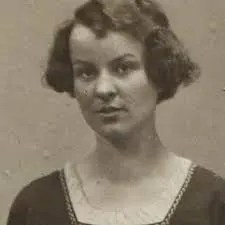
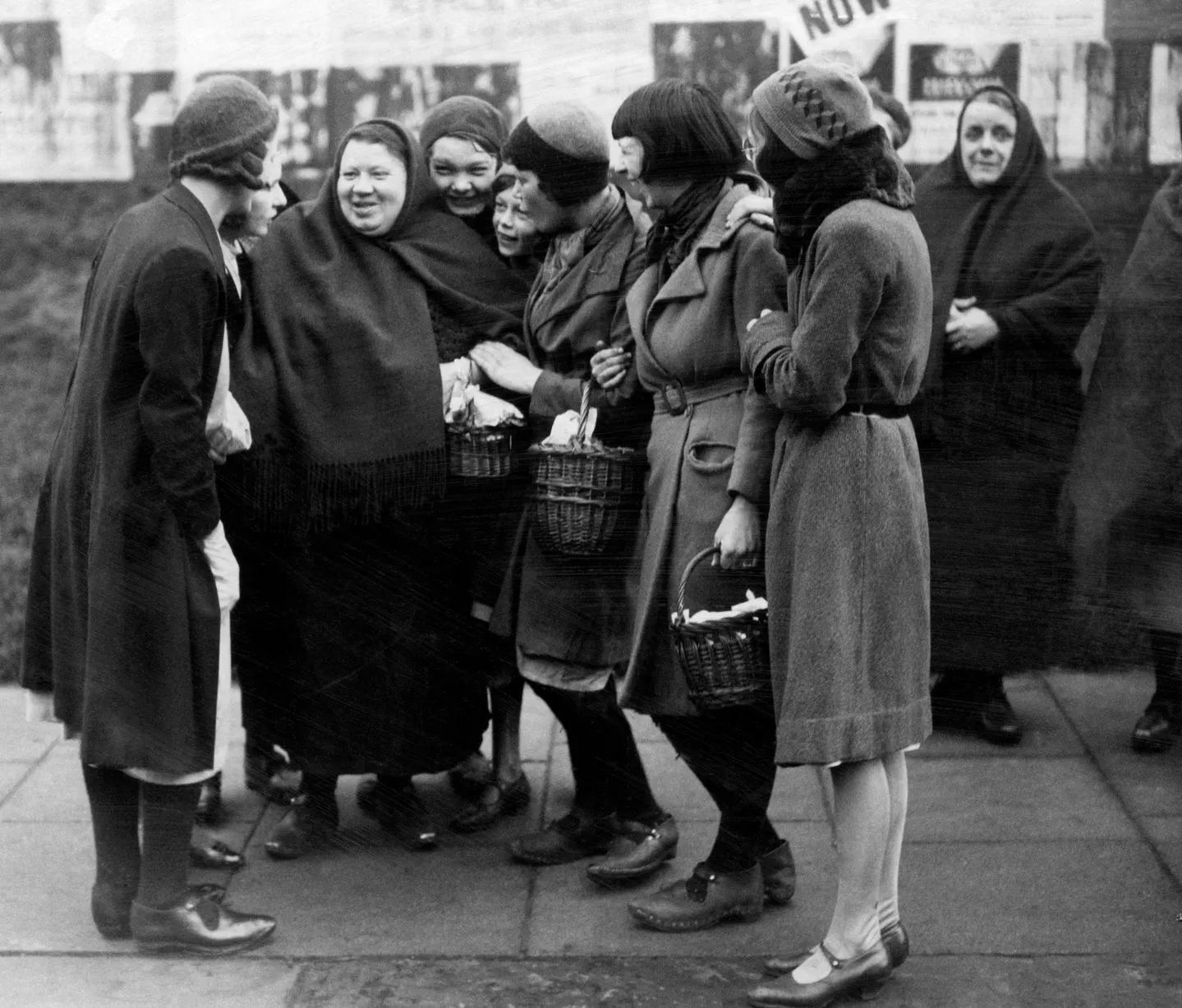
Louise Raw’s book is not only a fascinating history of the strike of 1400 women and girls at the Bryant and May factory in 1888, but also an expose of how little real research has been done into what was in fact a key episode in British trade union history. Louise argues that it has been underplayed both in terms of their actions and the significance of the strike.

I hope this book will go some way towards restoring to these women and their workmates their own voice and agency,serving both as a rewriting of the very beginnings of modern British labour history and as a tribute to the women..

Louise starts off with the best of credentials for writing this political history as she has worked In the East End with local people and has herself been on strike with them. Her research on the Matchwomen provides us with a new story about the women who have been ignored by more famous and lauded historians. Her book is the first proper history of this group of women workers taking industrial action.

matchwomen

She had to write a history in the absence of any autobiographies written by the individual women, and with all the participants long dead. Her account of how she did this is fascinating. She spent several years laboriously tracing the women through local papers and history talks and eventually succeeded in interviewing and speaking to the grandchildren of those whom she now believed were the true leaders of the strike.

The rich and valuable testimony of these three matchwomen’s grandchildren allows us to see the women growing up and becoming mothers,wives and grandmothers.Far from being downtrodden, all were figures of some standing in their communities, and well respected despite not conforming to popular notions of female “respectability”.

One of the key myths of the strike is that Annie Besant (a middle class journalist and Fabian) actually led the strike. Louise demonstrates that in reality Besant was fundamentally opposed to the kind of action that the women instigated, in fact she wanted a more middle class compromise ie a boycott of the Bryant and May products.

This is an important book on many levels but particularly in giving back to these women and their descendants the true history of their lives. Too often in histories the independent actions and motivations of working class people are ignored or underplayed. This book conveys to us an understanding of who these women were and why they decided to go on strike. It also puts into context the vibrant political community they came from, largely Irish, a community that has through the years played a significant role in British trade union history. As Louise says:

Certainly there is good evidence that the working-class Irish community in the Victorian East End was a politicized one. The London Irish brought with them traditions of passive mass defiance, street violence and armed rebellion.

In this book Louise shows that the Matchwomen’s strike was an important element in the lead up to the wave of strikes, including the Great Dock Strike of 1889, which led to the birth of the trade union movement in this country and the creation eventually of the Independent Labour Party.

In 2013 as we are going through a major attack on public services in this country it is important that we look back and learn from past experiences. The Matchwomen are part of the fabric of the trade union movement in this country and as such quite rightly deserve their place in our history.

And what is the message from this book for women in 2013? Louise comments:

125 years on, women are suffering disproportionately under the Government’s austerity programme. The poor are once again divided into ‘deserving’ and ‘undeserving’ by both politicians and sections of the media. Migrant workers are demonised, and Michael Gove wants to drag school history back to the Victorian classroom.

If the truth about the matchwomen’s victory had always been acknowledged, and taught in schools rather than ‘buried’ by history, they could have offered powerful role models to generations of young children. The self-esteem of girls given positive historical and cultural role models has been shown to be measurably higher.
I believe we need to reclaim our history, and the fearless spirit of workers like these, as we face the challenges of today.

Louise has organised a festival to celebrate the Matchwomen see

matchwomens festival 2013

Stop,Look,Listen…my weekly selection of favourite films, books and events to get you out of the house

Watch…..Tsar to Lenin (Cornerhouse 27 May) Released in 1937, this ranks among the twentieth century’s greatest film documentaries. It presents an extraordinary cinematic account of the Russian Revolution; from the mass uprising which overthrew the centuries-old Tsarist regime in February 191, to the Bolshevik-led insurrection eight months later which established the first socialist workers’ state and final victory in 1921 of the new Soviet regime over counter-revolutionary forces after a three-year-long civil war. It’s great that Cornerhouse are screening such an inconic film but only for one night…further details see

Celebrate…..the fiftieth anniversary of the publication of E.P. Thompson’s The Making of the English Working Class. Edward and his wife Dorothy, a respected historian in her own right, were good friends of Ruth and Eddie Frow. This exhibition at the Working Class Movement Library celebrates the book, and that friendship, and is a fascinating introduction to one of the most influential history books of the twentieth century. See

Support the Working Class Movement Library …..on Sunday 3 June at 3pm at Islington Mill a benefit in aid of the WCML will take place. Will Kaufman will be presenting . “All you Jim Crow fascists!” – Woody Guthrie’s freedom songs, the story of Guthrie’s transformation from a youthful Oklahoma racist to the ardent anti-racist champion who, along with many others, risked his life holding the line against American fascism during the Peekskill riots of 1949. Last time Will performed we had to turn away the punters so get there early if you want to see what will be more than just a singer and his songs. Tickets on the door at £10 venue; Islington Mill, James Street, Salford M3 5HW.

Enjoy….the art and music of the Netherlands on Thursday 23 May from 7-9pm at Manchester City Art Gallery as they launch a new exhibition; Home, Land and Sea Art in the Netherlands 1600-1800.
From 7pm see evocative paintings of everyday life, stormy seas, calm, peaceful landscapes and still lifes of luxury goods that have been redisplayed to reveal the Netherlands’ great artistic heritage. At 7.30pm enjoy an historic music performance by Accordes, who will play music by the 17th century Dutch composer and poet Constanijn Huygens (1596-1687) and his circle. The performance includes a lute, theorbo and Baroque guitar. Accordes is a sub group of the larger ensemble Partita. Further details see

Find out about….Ken Loach’s new party Left Unity as it holds its inaugural meeting for the folk of Tameside at 730-9pm in the Stalybridge Buffet Bar Thursday night, 23rd May. The meeting is a joint north and east Left Unity Manchester meeting. One of the speakers is from the Bedroom Tax campaign group in Gorton. Further details see

Check out mookychick.…..a feminist website that features fashion and feminist opinion, its funny…see

See…. a new play by award winning Shred Productions, SOUTH, set in Antarctica, 1962: “when ‘going south’ meant 12 months cut off from the world. Discovering upon arrival that the fiancée he left back home is pregnant, biologist Daniel puts ambition above his religious belief and stays. Seeking solace in his work, he uncovers disturbing evidence of the environmental disaster mankind may yet bring about. Teetering on the edge of depression, Daniel’s life is forever changed by his friendship with young dog-sledger, Jim. Then, when news of the Cuban Missile Crisis reaches the base, total destruction looms.”.
SOUTH plays at The Lowry, Salford Quays. Date/Time: May 29th, 30th & 31st – 8pm start • Tickets: £10 see

Go to a talk….about Votes for Women, 1868 – 1928 on Tuesday 21 May, 7:30pm at Chorlton Library. Socialist historian, Michael Herbert will tell the story of women’s long and difficult campaign for the right to vote in which Manchester played a key role with activists such as Lydia Becker, Esther Roper, Hannah Mitchell, Eva Gore-Booth, Teresa Billington, Mary Gawthorpe and the Pankhurst family. Free. Chorlton Library, Manchester Road Library 21 9PN. Further details see


Worth listening to
….PJ Harvey singing the Ballad of the soldier’s wife – music by Kurt Weill and lyrics by Bertolt Brecht. Originally called the “Ballad of the Nazi Soldier’s Wife” and Intended for broadcast to Germany as part of the US war effort, the song chronicles the progress of the Nazi war machine through the gifts sent to the proud wife at home by her man at the front: furs from Oslo, a silk dress from Paris etc., until finally, from Russia, she receives her widow’s veil…………see

Book Review; Militant Liverpool, A City On the Edge by Diane Frost and Peter North (Liverpool University press)

book review

In 1982 I moved to Liverpool to take up a job as a careers adviser, working in an office on a council estate in the north of the city. Two questions were asked of me as I started my first day at work; How did a Manc get a job in Liverpool and what football team (Everton or Liverpool) did I support? I was only 30 miles down the motorway from my hometown of Manchester but it seemed like I had entered a completely different world.

In this book Diane Frost and Peter North mark the 30th anniversary of the election of a Labour Council in Liverpool;
The actions of the council in the years 1983-85 mark the time that the city began to turn the tide. Far from putting off or delaying the regeneration of the city, the council’s actions represented a shout of anger and pain against years of poor leadership and private sector disinvestment, the economic and social policies of national government, and the global changes in the economy that at the time only dimly understood.

In 1983, alongside other cities such as Manchester and Sheffield, they decided to refuse to make the cuts. But, unlike the other cities, Liverpool was in a much worse position in terms of its infrastructure and economy:

Liverpool in the early 80s was, then, a city in crisis. For some, it was tragic that throughout the 1970s the city suffered from a triple crisis; an economic crisis in common with the rest of the country that saw manufacturing and port employment decimated; a geographical crisis that left a largely derelict city marooned on the wrong side of the country; and a political crisis as the city’s leaders failed to rise to these challenges.

In national politics in 1983 Margaret Thatcher was at her most popular, winning the General Election with a majority of 144 seats, but in Liverpool there was a wave of militancy across the city, not just in a highly politicised Labour Party but also in local communities and in the trade unions. After years of Tory or Liberal administrations Labour gained 46% of the vote and now had 51 seats in comparison to the Tories and Liberals, who together had 48 seats. Dubbed a “Militant council”, in fact only 9 of the 51 new councillors were paid up members of the Militant tendency. But, as Derek Hatton explains, all Labour councillors agreed that they going to take a very different path to past administrations:

We established that principle from the very word go that we were not going to put the Tory cuts on the backs of ordinary people because we had hammered the Liberals in the past for doing it, so we were not going to do that.

Unlike other histories of this period, Frost and North have used the oral testimonies of many of the key characters to explore the events of that period and to put into context an era that outside Liverpool has been erroneously written off as a time when a small gang of political extremists hijacked the city.

Working in Liverpool between 1982 and 84 I was shocked by the poverty that I saw around me, and the crippling cycle of unemployment which affected whole generations of families. What was heartening, and quite different to Manchester, was the highly politicised working class that I came across and a sense of pride in being Liverpudlian. This was translated into large demonstrations that took place in the city during the years I lived there and also to the high levels of activity in the trade unions, particularly my own, Nalgo.

Nalgo members demonstrate on budget day

Nalgo members demonstrate on budget day

In 1983 Liverpool Council told the Conservative Government that it would not make cuts. Indeed they created more jobs as they believed that only the public sector could produce an economic recovery. The Labour councillors took the campaign to the people through meetings, mass canvassing and leaflets. Other Councils, including Manchester and Sheffield, took the same stance but eventually they did deals with the government.

The result for Liverpool was that the government did offer them more money, which was interpreted as a victory for the city against the government. But the following year another confrontation led to the bankruptcy and disqualification from office of the 47 Labour councillors and the expulsion of both Militant and non-Militant members from the Labour Party.

In 2013 Labour is once again in power in Liverpool and facing a series of harsh cuts to its budget which will once again hit the poor the hardest. But the present administration, like others in Manchester and Sheffield, do not see the 1980s experience as one that should be followed today. As Derek Hatton says:

There are people out there who still take the line that we should do what we did in the 80s, but the danger of that is assuming the conditions are same as in the 80s. The fact is, they are not.

This is an important book not just because of its analysis of the politics of Liverpool but also because it asks questions about the nature of socialist politics . People and history may scorn the role of left wing activists in groups such as Militant but how is it that they spoke to the needs and hearts of working class people in the 1980s? Why is it the Labour Party commands so little respect from working class people? And at a time when the term working class gets thrown around in the media why is it they have so little involvement in left wing organisations?

Stop,Look,Listen…my weekly selection of favourite films, books and events to get you out of the house

WatchManchester Film Co-operative – in association with the IF Campaign –have put together two films about the real economic crisis. It’s a double billing of We’re Not Broke and the award-winning Secret City.
6.30pm – 8.pm: We’re Not Broke, the story of how American corporations have been able to hide over a trillion dollars from Uncle Sam, and how seven fed-up Americans from across the country, take their frustration to the streets and vow to make the corporations pay their fair share. And at 8.30pm Secret City, not London but the finance sector in the City of London. This award-winning film exposes the Corporation‘s anti-democratic constitution, the ancient laws which allow it function as a state within a state, and what happens to those who oppose it. It’s followed at 10pm: Q&A session with Secret City director Lee Salter.
Date: Tuesday, 14th of May.

Time: Doors open at 6pm, the event will finish by around 11pm.

Admission: £5 waged, £4 unwaged for the double bill (or £3 waged, £2 unwaged for single film).

Look at….The exhibition Burning Bright: William Blake and Art of the Book which runs at The John Rylands Library from 8 February 8 – 23 June. Admission is free. Blake ( 1757 – 1827) was a poet, painter, and engraver. Ignored during his lifetime, and seen as mad by some people, he produced what are now seen as iconic images in his drawings and poetry. In this exhibition there are thirty of Blakes’ etchings and engravings as well as works by artists and designers who were influenced by him. What makes this exhibition unique is seeing so many of his engravings in one place and in the wonderful setting of the John Rylands Library. Further details see

CelebrateThe Smiths On Screen. Screen Stockport Film Festival is declaring Monday 13th May 2013 officially #SmithsDay in Stockport. It’s exactly thirty years to the day since The Smiths released their debut single Hand in Glove, which was recorded at Strawberry Studios in Stockport. There will be speakers discussing the cultural influence of the Smiths, as well as a showing of the film A Taste of Honey written by Morrisey’s favourite playwright Sheila Delaney. See

Get involved…..Derby Peoples History Group are organising a Peace and Justice Festival on 14 September. They have a planning meeting on Thursday 16 May and are looking for people to get involved. See

Join….. Greater Manchester Keep the NHS Public and be inspired by the dedication of people to challenge the privatisation of the NHS. …next organising meeting on Wed 15th May 7pm, Lounge Room, Methodist Central Hall, 1 Central Buildings Oldham Street Manchester M1 1 JQ. The room room is booked as Keep Our NHS Public. See

Listen to…. The making of a protest album (in 5 easy steps) by Quiet Loner who made a protest album called Greedy Magicians in 2012. He made it on one evening in a Salford Church and the artwork was created using 19 Century machines. On 18 May from 3-5pm he will be playing songs from the CD and explaining why he wanted to make a protest album. Free. Further info see

Save the Salford Cranes!

I heard a siren from the dock
Saw a train set the night on fire
Smelled the spring on the sulfured wind
Dirty old town, whoa-oh, dirty old town

Ewan McColl Dirty Old Town

In the 1970s I was taken by my school to visit the docks at Manchester. We went on a boat which weaved between the ships that were scattered throughout the docks, which in those days were seen as an important part of the economy of the city, one which children should know about and value.

Many Manchester families had links with the docks, in my case my uncle worked there, taking his docker’s hook home at night. Like many dockers he was Irish , for the dock community included people from many ethnic backgrounds, including African. Billy Johnson, for instance, father of boxer and Communist Len Johnson, had worked there in the early 1900s as a pilot escorting the boats into the docks, having come from Sierra Leone.

Manchester and Salford docks were opened in 1894 by Queen Victoria. They were part of the newly completed Manchester Ship Canal, which meant that large ships could now navigate through the waterways to Ordsall.

Looking around Salford Quays to-day it is hard imagine how the docks once gave employment to thousands of people across Salford, Manchester and Trafford, from the era when dock work was casual and men lined up to be picked for a day’s work, to the heyday of the 1970s when the Transport and General Workers Union had negotiated good employment terms and conditions for its workers.

The docks were the third busiest port in Britain with merchant ships of 12,500 tons in weight bringing in a variety of goods to feed the local and national community. Thousands of people worked in the ports, not just dockers and labourers but the crews from the various liners and merchant ships that were constantly visiting the port as well as customs officials, office staff, canteen workers and cleaners.

In 1982, due to the increasing use of containers and an increased trade with the European Common Market, the docks were closed down. In the 1990s the docks became the Salford Quays. This represented the massive change in our economy: from a manufacturing one to a service based one.

Cleansed of a thriving dock community, the area to-day has almost a Stepford Wives aura. There are many flats, from which hardly anyone seems moves in or out of, sitting amongst the prestigious Lowry Theatre and Imperial War Museum. The only signs left of the past are the art deco dock office and two large cranes. The cranes were erected on south dock 6 (now known as Merchants Quay and Clippers Quay) in 1966, but were decommissioned in 1988 when they were moved to their present home.

They have taken on a new life as Alice Darlington, has run a one woman campaign to save them from demolition. She says:
It was a great industry, and these cranes are a landmark of that era. Once these cranes have been demolished it will be hard for young people to remember what the docks were all about and how important Salford was as a trading post. The cranes are enormous and represent how important the docks were to the economic health of the nation.

Alice Darlington

Alice Darlington

Cranes were an essential part of the docks, used to load and unloaded goods. There were over 200 at the height of the working life of the docks. The remaining two cranes are iconic and are a landmark in the area, made by Stothert and Pittand specifically designed with one single column leg for Dock 6.

Docks 1905

Docks 1905

Alice Darlington tried to get the cranes listed by English Heritage, due to their uniqueness, but they refused to do so, and this has been rubberstamped by the Secretary of State.
Darlington says she cannot understand a Labour Mayor Ian Stewart’s refusal to support the campaign to keep the cranes:
I don’t understand why a Labour representative is so against the working class heritage of Salford. If he keeps the cranes it could offer jobs to local people to maintain them.

As Salford Council make massive cuts to their frontline services they have responded to the campaign over the cranes by citing financial reasons. Labour Mayor Ian Stewart:
It would be wrong to spend £1million on preserving two rusting and dangerous cranes, when the people of Salford are struggling to make ends meet

Darlington and other local cranes campaigners, including the Salford Star, challenge the figures and believe that the money for refurbishment has been ringfenced and that they would only need to raise £22,500 from private sources to make up the shortfall from the Council.

The spotlight is now on Salford Council to see if they will demolish the cranes. Darlington is continuing with her e-petition and is gathering support from the local community as she takes her paper petitions around the local area.

We are getting lots of support from all parts of the community and the press. The cranes are part of a rich heritage for Salford people and it is important to remember that it was one of the greatest inland ports of the world.

salford cranes

Sign the petition at http://epetitions.direct.gov.uk/petitions/45202

Stop,Look,Listen…my weekly selection of favourite films, books and events to get you out of the house

Watch….a mini film festival at the Working Class Movement Library…including on Wednesday 15 May at 2pm they are showing a locally made film The Condition of the Working Classes, an up-to-date take on Engels’ classic of the same name. And on 17 May at 7pm a film by Luke Fowler The Poor Stockinger, the Luddite Cropper and the Deluded Followers of Joanna Southcott, a curious mixture of archive footage and newly shot material reflecting on the life of critic, historian and activist EP Thompson:.. It captures a moment of optimism, in which Thompson’s ideas for progressive education came together with political resistance and activism. For further info see

Go and see…two plays about the condition of women…the Royal Exchange are doing Ibsen’s A Doll’s House, his insightful and emotional story of a woman’s struggle to be liberated. Written in 1879, it still has an inner truth about the lives of women, maybe not so much in the west.
And at 3Minute Theatre you can see Female Transport, written 40 years ago, which again looks at the lives of women, those who were deported to Australia for petty crimes in 19th century Britain. Their lives on the ship mirrors societys’ treatment of women and the journey becomes one of political education and liberation. Further info see

Sign a petition.The Shrewsbury 24 Campaign aims to overturn the unjust prosecution of 24 building workers who were charged following the first ever national building workers strike in 1972. They picketed building sites in Shrewsbury during the dispute and were prosecuted in Shrewsbury Crown Court in 1973. They became known as the Shrewsbury 24. Six of the pickets were imprisoned. Their crime was to be part of a trade union campaign to get a decent rate of pay and safer working conditions for all building workers. For more information, see the campaign website
The campaign needs more signatures for their petition calling for full disclosure of all Government documents relating to the 1972 building workers strike and the conspiracy trials at Shrewsbury. Government files relating to the strike have been withheld from the National Archives even though more than 30 years have passed. please sign.

Look at..the photography of Eric Latham…he is from Beswick in East Manchester and in his book On Class Street he looks at the lives of people, mainly men, in an area that went from being a vibrant community to a wasteland when unemployment hit in the 80s. It is Eric’s story as well and it made me want to cry when he tells the story of how his father’s health was ruined by his working conditions in a local factory which led to his early death. The photographs compliment the stories and it was part of a wider project which toured local schools. Further details

Laugh with…. the latest chapter of the Artist Taxi Driver’s attack on the privatisation of the NHS….he pushes a plastic pig to parliament see

Go to…CAMP FRACK 2 SAYS NO TO FRACKING – YES TO ONE MILLION CLIMATE JOBS Mere Brow – 10th, 11th, 12th May. Organised by a broad coalition of local residents groups, environmental activists and trades unionists from across Britain. Camp Frack 2 aims: to be the largest unified symbol of resistance to the threat of extreme energy developments, such as hydraulic fracturing or ‘fracking’, that the UK has seen so far! See

Spirit of Moston 2013!

Most people would not associate coal with Manchester nor art with the working classes. Go to the Miners Club in Moston, then, and have your prejudices shattered.

A coal mine was opened in Moston in the 1850s and around it a housing estate (called the Miners’ Estate) and a bath house for the miners was built by the Coal Board. People followed the work and it became a thriving area.
But the pit was closed in 1950, so if you wanted to work as a miner you had to travel to East Manchester. The former bath house re-opened as a social club, but closed in the 1990s.
moston miners centre

Two years ago local resident Louis Beckett, his parents and friends decided to create a community centre in the old building for the people from the Miners’ Estate.
Louis wanted a centre that would not just be a place to watch a band and have a drink but also :
Remind younger people of their history in this area. And through the cinema bring the community together .

The cinema was built by volunteers from across North Manchester and has gone from strength to strength. Recent films have varied from Ken Loach’s Spirit of 45 to the latest Snoop Dog. Local groups can rent the cinema and they offer free showings when they can afford it.

The centre is very much a work in progress. On the outside it looks like a derelict building which has been fenced as if to keep the public out, but inside it’s a friendly place with a café run by Joe, Louis’ dad, and a centre that is buzzing with activity. There is a function room that can be rented for everything from 18th birthdays to Ska nights, while local organisations such as drama groups, a residents group and FC United use the centre for their activities.
miners centre

Louis wants to put on a music and arts festival this year to showcase some of his own artwork as well as that of the locals. Like cinema, he feels that art is seen as a middle class pursuit:

I have a deep passion for art but could never afford to take it up as a career.

Louis came from a family of builders and was encouraged to get a trade as a young man, even though he attended Manchester High School of Art and Mancat College. He became a fabrication engineer, but his real passion was for painting, drawing and sculpting. Ironically, as the engineering industry followed the mining industry into decline, he could spend more time producing his art work.

Louis and his paintings

I decided to exhibit in local pubs, putting on bands as well as more paintings. One night I sold 12 pieces of work!
He hopes that the art festival will give the opportunity to local people to exhibit their work and provide a more complex view of what it means to be working class.

The centre is still being renovated and all the money that is made goes back into improvements . It is heartening to see that in one of the poorest areas of Manchester a group of people have got together to try and improve their lives and those of their neighbourhood and offer more than just cheap drink and food. For me it confirms my view that if things are to change for working class people in Britain it is down to them to get out there and organise it. For further information about how you can support it go the small Cinema website. For a short clip about Moston Pit with Lou and Paul Kelly go here

Stop,Look,Listen…my weekly selection of favourite films, books and events to get you out of the house

Watch…and support Moston Small Cinema….Post Tenebras Lux Juan and his family live in the Mexican countryside and the film explores their lives, their marriage, poverty, gender and our relationship to the natural world. Maybe not the kind of film you would expect in Moston but that is the beauty of projects such as Moston Small Cinema, which is all about bringing cinema to the heart of a community, Find out more…..

Listen to ….author and political activists, Lyndsey German and Betty Tebbs at Waterstones Book Shop on Monday 29 April at 6pm. Lyndsey German’s new book How a Century of War Changed the Lives of Women, explores the history of women’s involvement in the Stop the War Movement over the last ten years and also reflects on why it has brought in so many women to the movement. Betty Tebbs, of Whitefield CND, will join her in the discussion about women’s role in the peace movement over the last 100 years. See

Look at…..the paintings of Brian Clarke at Gallery Oldham from April 20-Sept 14. He was born and trained as an artist in Oldham and is famous for his work in stained glass – see it in the Oldham Spindles shopping centre. His reputation is worldwide as he has been involved in projects from the Victorian Quarter in Leeds to Norte Shopping Rio de Janeiro, Brazil. Brian is 60 this year and this is a homecoming for him, a reflection on his work and also in the film that accompanies the exhibition we find out more about his family and his love of art. Although famous for stained glass he draws everyday and in the works shown here we see some of his greatest influences, including his early life. I loved his drawings of Oldham mills As he says: My love of architecture began with my love of cotton mills’, he says. ‘I am built of red bricks and covered in black smog

Enjoy……the work of John Crumpton… BAFTA award winning sound editor, film and video maker, writer, trainer, BECTU learning organiser and photographer. In 2005 he, together with Feisal Querishi and Michael Herbert. produced a film about the work of the WCML which is now accessible on his website, alongside several of his other hits including my favourite… I married a Cult Figure from Salfordsee

Remember….Alice Wheeldon…on May 1 Derby Peoples History Group will be remembering her life as a suffragist who opposed the First World War. They will be unveiling a plaque to commemorate her life and politics see

Celebrate International Workers Day…on Saturday May 4. Assemble: Bexley Square, Salford 10am and march from Bexley Square at 11am. Bringing together campaigns against the privatisation of the NHS, against the Bedroom Tax and defending jobs in public services…further details see

Listen to,,,, Beautiful Africa by Rokia Traore. I saw Rokia in a small club in Oldham several years ago. Her music is essentially African and in her latest album Beautiful Africa she comments on the war going on in her home country of Mali. Now based in Bristol her music has developed and with John Parish, who produces the work of PJ Harvey, it has a more rocky feel to it whilst mixing in her brilliant voice and interesting African sounds…see

Enjoy…..the angry taxi driver. Who says the working classes are not philosophers? ! See his latest rant when the BBC ask him to take part in a documentary….but there is no payment………classic.. see

“The Joy and fellowship of the open fells”: the Holiday Fellowship 1913-2013

Ambleside 1891

28 April is the 81st anniversary of the day in 1932 when over 400 women and men from the Lancashire branch of the Communist inspired British Workers Sport Federation took part in a mass trespass on Kinder Scout to establish the principle of the people’s right to roam. The trespass was controversial at the time, being seen as a working class struggle for the right to access the countryside versus the rights of the wealthy to have exclusive use of moorlands for grouse shooting.

In 1891 in Colne a Congregationalist minister, T.A. Leonard, had different ideas about why working people should take to the hills and he set up an organisation which would offer walking holidays in the Lake District and beyond to the millworkers where he lived. He frowned upon the annual trip to resorts such as Blackpool and Morecambe:

This kind of holiday leads to thoughtless spending of money, inane types of amusement and unhealthy crowding in lodging houses.

Thomas Arthur Leonard

Thomas Arthur Leonard

Leonard therefore set up a rambling club, and organised a holiday to Ambleside for the summer of 1891. Over the next few years the group travelled to Keswick and as far as Caernarvon in North Wales. The template for the holiday was a break for four nights, with 30 people in the group, enjoying basic accommodation. Leonard summed it up:

In those days we were content with very primitive arrangements, so long as they gave us the joy and freedom of the open fells. All we needed was food, beds and good fellowship.

In 1897 a small company was formed called the Co-operative Holiday Association (CHA). Leonard resigned as a minister and became its full-time General Secretary, based in one of their properties, Abbey House, in Whitby, Yorkshire.

In the early 1900s he numbers of centres owned by the CHA grew and by 1913 they had 18 centres, including five overseas.

But Leonard felt that origins of the CHA had been diluted and that it had become a middle-class, conservative organisation. So the Holiday Fellowship was launched to provide simple adventurous holidays with an emphasis on youth and expanding their trips to overseas, the aim being to provide an all inclusive holiday for the price of an average weekly wage.

Hf Badge

Hf Badge

The headquarters was now in Conwy and several other centres were purchased in Yorkshire and near Stranraer, as well as transferring a centre in Germany from CHA to the HF.

Prices for the holidays varied from 25/- per week at the Newlands centre in Derwent Bank plus 4/6d for walking excursions to £5/10/6 per week in Germany. A trip to Germany in the summer of 1914 led to two of the tourists being interned for the period of the Great War!

Singing was an integral part of the HF holiday, and until 1933 there was always a song book included in the programme. The songs ranged from religious hymns to the popular tunes of the day.

Hf songbook

Hf songbook

The HF continued to grow throughout the 1920s with nearly 30,000 guests in its 23 houses. By 1930 Its membership magazine Over the Hills had a circulation of 21,000 copies.

The Second World War led to the closure of many of the centres and saw guest numbers fall to 14,500 in 1943.
T.A. Leonard died In 1948, aged 84. An activist all his life he had not just been involved with the HF but had also been involved with the creation of the YHA, the National Trust and the Ramblers Association.

The HF (now called HF Holidays) has continued and this year celebrates its centenary. Its head offices are in Cumbria and Hertfordshire and it is the UK’s largest walking holiday company. It maintains its links with the Ramblers Association and is their recommended walking holiday partner. It works with other organisations such as the Outdoor Industries Association to help preserve wild land and wildlife.

Walking is still a popular activity and may become even more attractive to the public given the economic downturn. HF has seen the number of its walking groups double over the years. Holidays with HF can mean travelling to 113 destinations in 46 countries across the world. All its group leaders are volunteers and HF is still a co-operative so it returns its profits back into the organisation to improve the holiday experience of its guests.
For more information about HF see

Stop,Look,Listen…my weekly selection of favourite films, books and events to get you out of the house

Watch…Imagine Waking Tomorrow at Three Minute Theatre on 24 April , screening at 8pm (doors open at 7pm). The film is about Bill Drummond, artist, musician and author, most famous for creating the avant-garde group KLF and burning a million pounds. He sees all his activities as art and his latest project is a choir called The 17, inspired by the concept of waking up to find that all music had disappeared.
Imagine Waking Tomorrow is an observational film that follows the artist, musician and author Bill Drummond over the course of a week in 2011. Bill was asked to be the Composer in Residence at the Sensoria festival and Manchester documentary maker Andy Benfield used the opportunity to make this touching film of Bill’s exploration of the soundscapes of the city in streets, cafés, pubs and huge steel forges.

Entrance: £3/£2 concessions.
To book, please send a message via the form at http://andybenfield.co.uk/contact-me/

Look….at Edith Tudor-Hart: Quiet Radicalism at the Open Eye Gallery in Liverpool. Edith (1908-73) was born in Vienna, but had to escape the government’s war against socialists. She fled to England and married a GP. Edith was a communist and was involved in spying for the USSR whilst in England. In the 30s she lived with her husband in the Rhonda Valley in Wales and used her photography to document the savage working conditions that mining families had to endure. Two of the photographs are my favourites: they show miners and their womenfolk marching through the streets of the Rhonda demanding better conditions. What is interesting is that Edith must have stood on a wall to get the photos and the miners are turning to look up at her, it must have seemed very strange to see this this young woman photographing their march. Edith used her art to document the poverty of communities in Wales and later in England, even today there is a humanity and compassion that seeps out of the images. She worked for many prestigious newspapers and magazines and covered one of the most volatile periods of history in this country.

Commemorate… In April 1932 over 400 people participated in a mass trespass on Kinder Scout, a bleak moorland plateau, the highest terrain in the Peak District.The event was organised by the Manchester branch of the British Workers Sports Federation. They chose to notify the local press in advance, and as a result, Derbyshire Constabulary turned out in force. A smaller group of ramblers from Sheffield set off from Edale and met up with the main party on the Kinder edge path. Five men from Manchester, including the leader Benny Rothman, were subsequently jailed. The trespass was controversial at the time, being seen as a working class struggle for the right to roam versus the rights of the wealthy to have exclusive use of moorlands for grouse shooting. It led to the establishment of the principle of peoples’ right to roam which has been embedded in legislation.
A Spirit of Kinder Day will be held at New Mills Town Hall on Saturday 27 April from 2.30pm. It is hoped the event will become an annual celebration.
The free event will feature talks, stalls and music. Boff Whalley, founder member of Chumbawamba, will sing the band’s tribute to the Mass Trespass, You Can, and Chapel-en-le-Frith Male Voice Choir will again lead the singing of The Manchester Rambler. A special Folk Train featuring the Chorlton Folk Club will leave Manchester Piccadilly for New Mills at 11.45am.
More information here.

Remember….…Workers’ Memorial Day – 28 April 2013, a day to remember the dead:fight for the living. Health and Safety legislation is embedded in law nationally and at a European level, but workers are still being killed and injured at work. This campaign calls for stronger trade union organisation to defend workers and for higher penalties for those companies who flout the law. In Manchester on 28 April there will be rally at Albert Square 11am to 12 noon with one minutes silence followed by music and speeches. From 12:30, at the People’s History Museum there will be a Workers Memorial Day Exhibition, short speeches and presentation of prizes for schools IWMD competition winner and refreshments. For more information contact Hilda Palmer mail@gmhazards.org.uk, 0161 636 7557

Go for a walk……and see sunny Salford…On Sunday 28 April at 10.45am there will be a history walk, Radical Salford, setting off from the Black Lion, 63 Chapel Street. This walk will explore Salford’s rich radical history including the Flat Iron Market, the General Strike of 1842, vegetarian Christians, Salford’s first birth control clinic, Salford’s Socialists, Votes for Women and the disturbances in Bexley Square in October 1931. It will be led by Michael Herbert who has been researching and writing about Manchester and Salford’s radical history for many years..
Fee £6 (£5 concessions). Advance booking via redflagwalks@gmail.com.

Listen to, and find out some news from the south..,,,a rap about the protests at Sussex University where students joined workers in protesting at the privatisation of 230 jobs. Further info see
For one young woman’s views on the protests see

Still time to influence the Lords… over the debate around privatisation of the NHS. There is a debate on Wednesday so get that email sent! Further info see

Post Navigation

Follow

Get every new post delivered to your Inbox.

Join 272 other followers